Explore UCD

UCD Home >
overlay image

Student Immigration Support

Student Immigration

If you want to study at UCD and you are a non-EU, non-EEA, non-Swiss, or non-UK national, you will need to follow the student immigration process to meet Irish immigration legislation and policy guidelines.

If you require a visa to study here, the process for student immigration starts with applying for a student-entry visa. Once complete, you will arrive in Ireland and present yourself to border control. You will then register with the Irish immigration authorities, and every year during your studies, you will need to renew your immigration permission. When you graduate, you can apply for post-graduate permission, allowing you to work in Ireland for a fixed period of time.

Please check the Student Immigration Timeline and Student Immigration Guidelines below for detailed information. To help you understand the process, we have shared a video where our Student Immigration Adviser, Andrew Grier, explains the process.

Our dedicated team of immigration experts can also provide comprehensive support to you throughout your immigration journey.

Student Immigration Timeline

Our Student Immigration Timeline will guide you through the visa application process for studying in Ireland.

  • 1. Check if you need an entry visa

    Please check if you need to apply for an entry visa before you come to Ireland to study.Check Entry Visa Requirements

  • 2. Apply for an Entry Visa

    If you require a visa to study here, the first step for your Irish entry visa application is to check the requirements of the closest Irish Embassy and then fill out the AVATS form.
    Apply for an Entry Visa

  • 3. Arrival in Ireland

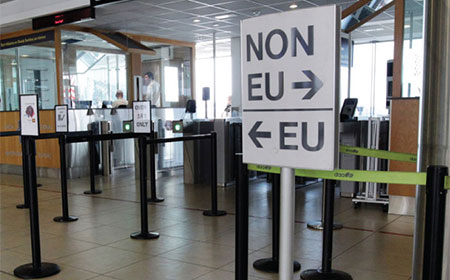
    When you arrive in Ireland, you must present to an Immigration Officer at the airport or port of entry. Information for Non-EU/EEA Nationals

  • 4. Booking a Registration Appointment

    If you wish to register a permission for the first time, please register for or log into your personal Customer Service account.
    Book Appointment

  • 5. Registering a permission for the first time

    If you are a non-EU, non-EEA, non-Swiss, or non-UK national coming to Ireland to study for more than 90 days, you must register your immigration permission with your local immigration office.Register Immigration Permission

  • 6. Irish Residence Permit (IRP) card

    An Irish Residence Permit is a small card that shows you are legally in the State through the type of immigration permission you have, represented by a stamp number. If you are a full-time student, you should hold a valid Stamp 2 or 2A permission.Irish Residence Permit (IRP) Card

  • 7. Registration Renewal

    When you receive your IRP card, the expiration date will be indicated. Depending on your permission, you may be able to renew it.Renewing a Permission

Student Immigration Guidelines

The Irish entry visa application process can be summarised in the following simple steps:  

  1. Create your online application form via AVATS.
  2. Print and sign your completed form.
  3. Arrange your visa appointment with Visa Facilitation Service (VFS), if applicable.
  4. Compile your supporting documentation.
  5. Submit your documents based on the country-specific instructions on the printed AVATS form.
  6. Pay your visa fee (country-specific).
  7. Await the visa application outcome.

For detailed instructions on how to apply, visit your nearest Irish Embassy’s website. Information on Irish student visa policy is available on the (opens in a new window)Irish immigration website.

Entry to Ireland, for any non-EEA citizen, visa or non-visa required, is determined by the Immigration Officer at border control and is based on the documentation presented at the time of arrival.

All relevant factors are taken into account, including but not limited to, the purpose of the stay and your ability to support yourself during your stay in Ireland.

Each application for entry to Ireland is assessed on its own merits. Therefore, we advise all our students coming from outside the EU to carry any relevant documentation with them for presentation to the Immigration Officer on arrival in Ireland.

When you land in Ireland, we recommend that you have the following documentation with you:

  • Passport (with your valid student entry visa if you are a visa required national).
  • UCD Offer Letter available in SISweb.
  • Evidence of private medical health insurance with detailed coverage information.
  • Evidence of tuition fees paid, scholarship or sponsorship details or US Financial Aid if applicable.
  • Accommodation details.
  • Evidence that you have access to at least:
    • €10,000 for courses resulting in residence of greater than 8 months
    • €833 per month or €6,665 (in total) for courses resulting in residence of 8 months or less.

All documents presented should be originals and, if in a language other than English, accompanied by translation.

On approval, you will get a temporary immigration permission valid for up to 90 days stamped in your passport. You must register with the (opens in a new window)Irish Immigration Service within the timeframe stamped on your passport in order to obtain an Irish Residency Permit (IRP) card which provides permission to remain in Ireland beyond the date stamped on your passport.

Please be aware that it is not possible to change to student status if you receive a tourist immigration stamp on arrival.

If you arrive via the border with Northern Ireland to study in the Republic of Ireland, you must report to an Immigration Officer at the Dundalk Immigration Office, a port of entry at Dublin Airport or Port, or a local (opens in a new window)Garda Síochána (police) immigration office within 30 days of your arrival.

First time registration with the Irish Immigration Service.

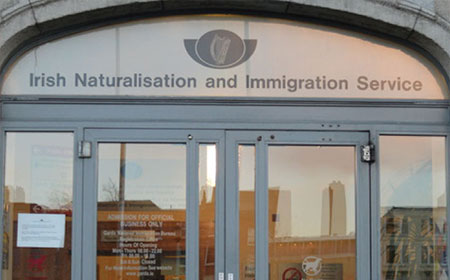
All non-EEA and non-UK students who are staying in Ireland for longer than 90 days, must register with (opens in a new window)Irish Immigration Service after they have registered with UCD and before the expiry date stamped on their passport by immigration officials at the airport.

If you wish to register a permission for the first time, please register for or log into to your personal (opens in a new window)Customer Service account and attend the Burgh Quay Office which is located in Dublin City Centre. Information on how to access the Digital Contact Centre (Customer Service Account) and verify your registration can be found on the (opens in a new window)ID-Pal website, and you can also find a helpful guide on using the (opens in a new window)online self-service portal.

Please note: Please ensure your appointment is booked for a date after your course start date. We strongly advise students to attend their first time registration appointment on a date after the second week of their course having commenced. Your registration may be refused if you attend your appointment too early.

You can email Irish Immigration directly in relation to issues with verification at the following address: (opens in a new window)i(opens in a new window)mmigrationportalsupport@justice.ie 

UCD Global also has a helpful video, on (opens in a new window)how to book your first time registration appointment.

Please be aware that your biometric data such as fingerprints and photo will be collected as part of your registration process.

You must have the following when you go to register:

  • Your passport
  • Certificate of Attendance (All students can access an electronic Certificate of Attendance online via SISWeb
  • Proof that you have paid at least €6000 in course fees (an online copy of your Fee Receipt (known as a Fee Statement) is available through SISWeb)
  • Proof of scholarship funding (if relevant)
  • Proof that you have private medical insurance 
  • If you did not need a (opens in a new window)visa to come to Ireland, you must also prove that you can support yourself financially while you are in the country.  You can do this by showing you have direct access to:  
    • €10,000 for courses resulting in residence of greater than 8 months
    • €833 per month or €6,665 (in total) for courses resulting in residence of 8 months or less.

Please see further information about evidence of finances on the (opens in a new window)Irish Immigration websiteA credit/debit card for payment of €300 registration fee.

You can check all requirements for first time registration on the (opens in a new window)Irish Immigration website. If any of the documents are missing, your application will be refused. See the dedicated (opens in a new window)Irish Immigration FAQ page for registration.

Please note that students under the age of 18 must have their guardian present at the time of first registration.  Guardians must have their own passport, written authorisation from the students parents (proof of guardianship) and proof of residence in Ireland. The 300 euros fee is waived for these students.

On successful completion of your ISD registration, you will be issued with an Irish Residency Permit  (IRP) card which is your registration certificate. This will be sent to you by post/mail within 15 working days. This is valid for one year, or for single semester students, until the end of their course. Your IRP card is a very important document and you must carry it with you at all times.

If you do not receive the card within 10 working days, contact ISD on their (opens in a new window)Digital Contact Centre with your full name, registration number (if available), nationality and date of birth, and log a query there. 

Online renewal of permissions from all applicants nationwide should be submitted using the ISD (opens in a new window)online renewal portal. Applicants will not need to attend the Burgh Quay Registration Office in person to renew an immigration permission, unless it is deemed necessary. Please check (opens in a new window)the list of required documents for your online renewal.

This means all students nationwide looking to renew their registration will no longer have to book an appointment and attend the registration office in person.

Prepare to renew online by registering through the (opens in a new window)INIS Online renewal application portal.

Please see the documents you must upload to the portal for the renewal of registration:

  • Copy of Biometric page of your current valid passport(s)
  • Copy of your current Irish Residence Permit (IRP) or 'IRP card'
  • Proof that you are enrolled on a course of full time education (Certificate of Attendance available in SiSWeb). 
  • Proof that you have paid UCD fees (you must be able to show you have paid at least €6,000. An online copy of your Fee Receipt (known as a Fee Statement) is available through SISWeb. This receipt is an accurate and official reflection of your fee account.
  • To access your Fee Statement in SISWeb, navigate to Registration, Fees and Assessment > Programme Fees and Payments > Generate Statement.
  • Proof of scholarship funding (if applicable)
  • Proof that you have private medical insurance (you cannot use travel insurance)

A €300 fee applies to all renewals and this is paid online at the time of application.

Please make sure you have your correct address in SiSweb as it will be printed in your documents. Your new IRP card will be posted to the address you provide.

Processing times can be checked (opens in a new window)Irish Immigration website. You can find further information about registration renewals on the (opens in a new window)Irish Immigration Service website and you can submit a query online using ISD's (opens in a new window)Digital Contact Centre.

Ireland's graduate visa, also known as stay-back visa, refers to the Third Level Graduate Programme that allows non-EEA students, who have graduated from Irish higher education institutions, to remain in Ireland to seek employment.

You must have graduated after 1 January 2017 with a Level 8 or above degree, and you must have a valid Stamp 2, in addition to a final transcript (Dated within 6 months of your Stamp 1G application) to qualify.

Find out more about the Stamp 1G permission or graduate visa for international students.

If you are a non-EU/EEA student, you are required to have private health insurance for the entire duration of your stay in Ireland. Visit our Health Insurance page to find out more.

The Irish Immigration Service (opens in a new window)FAQ webpage outlines the rules for non-EU/non-EEA/non-UK students with a valid Irish Residence Permit (IRP) who plan to remain outside Ireland for more than 90 days. Their website currently states the following:

Q: I registered with an Irish college but will spend a semester (or more) abroad. What should I do?

A: You can only register for the time you are actually residing in Ireland. Between holidays, personal and work-related travel, absence from the state should not exceed 90 days in a rolling year. In addition, you cannot hold a residence permit for more than one EU country at a time.

Based on the above information, the Student Immigration Support Team at UCD Global has provided further guidance for UCD students. Below are some common queries and responses:

  • I am a current UCD student from outside the EU/EEA/UK and I am currently abroad on an exchange programme for the Spring trimester. I have a valid IRP card to cover my return to Ireland. What should I do if I encounter difficulties?

To return to Ireland, you should hold a valid (opens in a new window)Irish Residence Permission (IRP) card or a valid Irish entry visa. If you are due to resume your studies in UCD before the expiry date of your current IRP card, you should be able to re-enter Ireland and apply for renewal as usual. If you encounter any difficulties, please contact the Student Immigration Support team at UCD Global at (opens in a new window)immigration.enquiries@ucd.ie.

  • I am a current UCD student from outside the EU/EEA/UK and I am currently abroad on an exchange programme for the Spring trimester. My IRP card will expire before I return. What should I do now?

If you are a visa-required national, you should apply for a (opens in a new window)new Irish entry visa at the nearest Irish Embassy. If you are a non-visa-required national, we recommend that you have your entry documentation ready when you return to Ireland, including a fresh UCD Certificate of Attendance, a UCD Fees Statement, a scholarship letter (if applicable), and valid health insurance. If you encounter any difficulties, please contact the Student Immigration Support team at UCD Global at (opens in a new window)immigration.enquiries@ucd.ie.

  • I am a current UCD student from outside the EU/EEA/ UK and I am due to go abroad on a mandatory exchange for 1 year in August. I have a valid IRP card up to December. I need to apply for a visa for my destination country and I will need to travel back to Ireland at the end of my exchange year abroad to complete my degree at UCD. What should I do?

Students who are due to travel outside Ireland for more than 90 days must consider difficulties in obtaining an entry visa for their next host country if they don’t have an IRP card to cover the time they will be abroad. It is also important to consider possible delays in obtaining a (opens in a new window)new Irish visa to return to Ireland once their exchange ends, and the impact it may have on the eligibility for Stamp 1G permission.

If you wish to discuss your circumstances, please contact the Student Immigration Support team at UCD Global at (opens in a new window)immigration.enquiries@ucd.ie, as we can help you assess the situation. In addition, please contact your International Programme Manager/Exchange Coordinator to discuss any aspects relating to your programme. 
  • I am a current UCD student from outside the EU/EEA/UK and I am due to complete the final year of my degree programme abroad. I would like to return to Ireland to apply for the Third Level Graduate Programme/Stamp 1G. What should I do to prepare?

Students require a valid IRP card indicating their Stamp 2 permission to apply for the (opens in a new window)Third Level Graduate Programme. They also need their academic transcript issued by UCD and to be in Ireland to apply for the graduate permission.

If a student completes the final year of their course abroad and doesn't have a valid IRP card indicating the Stamp 2 permission along with the other requirements, they are not eligible to avail of the Third Level Graduate Programme.

  • I am a current UCD student from outside the EU/EEA/UK and I have been issued an IRP card up until the end of May. I am required to travel to another European country in Autumn as part of my programme, however, I can’t apply for a visa for that country as I don’t have a valid IRP card for my residence in Ireland. How should I proceed?

If your study period abroad becomes unfeasible due to immigration limitations, please contact your International Programme Manager or Exchange Coordinator to discuss any programme-related matters.

  • I am a prospective UCD student from outside the EU/EEA/UK. My programme includes a mandatory study abroad period of more than 90 days. I require a visa to enter Ireland and I will require a visa for the destination country of my study abroad period. How should I prepare?

Students who are due to travel outside of Ireland for more than 90 days must consider difficulties in obtaining an entry visa for their next host country if they don’t have an IRP card to cover the time they will be abroad. It is also important to consider possible delays in obtaining a (opens in a new window)new Irish visa to return to Ireland once their exchange ends and the impact it may have on the eligibility for Stamp 1G permission.

If you wish to discuss your circumstances, please contact the Student Immigration Support team at UCD Global at (opens in a new window)immigration.enquiries@ucd.ie, as we can help you assess the situation. In addition, please contact your International Programme Manager/Exchange Coordinator to discuss any aspects relating to your programme. 

An aerial shot of UCD Belfied's Campus.

Take the Next Step

Contact us today for more information or apply now.